Laser synthesis of nanomaterials offers a clean, versatile, and highly controllable route for producing nanoparticles and nanostructures with tailored properties.
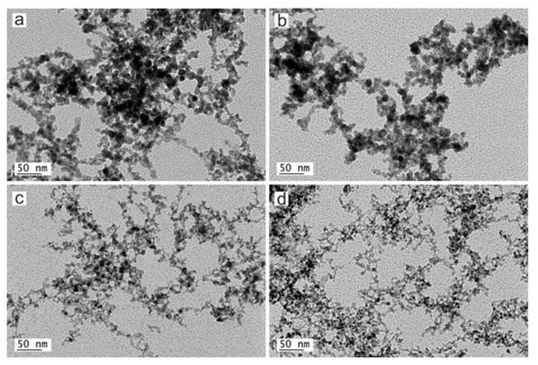
In our works, we demonstrated that using liquid‑phase laser ablation, where a high‑energy pulsed beam irradiates a solid target immersed in a solvent, ligand‑free nanoparticles with narrow size distributions and high chemical purity are produced due to the rapid cooling of the transient plasma plume. This technique avoids chemical precursors and enables fine control of composition, crystallinity, and surface chemistry simply by adjusting laser fluence, pulse duration, or the surrounding medium.
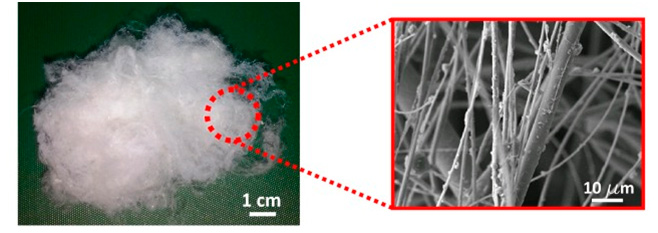
We have also collaborated in the development of laser spinning technique. In this case, nanofibers and core–shell nanostructures are formed in the following way: the intense laser irradiation melts and ejects micro‑jets of material that undergo rapid stretching and solidification, producing continuous nanoscale filaments with unique morphologies and functional characteristics. Together, these laser‑driven methods enable the scalable fabrication of a wide variety of metals, oxides, carbides, and composite nanomaterials, making them highly attractive for applications in catalysis, photonics, energy storage, biomedicine, and environmental technologies. Their contact‑free nature, minimal waste production, and capacity for precise spatiotemporal control position laser‑based synthesis as a key platform in the development of next‑generation nanomaterials.