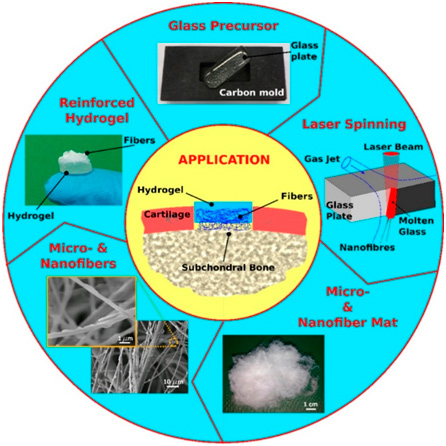
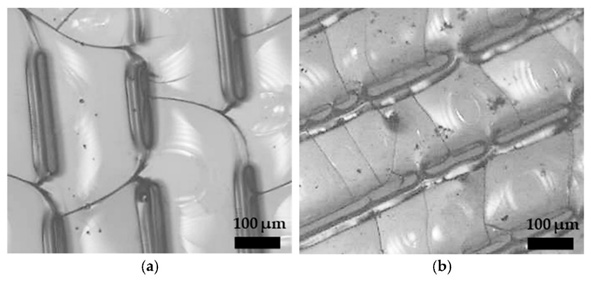
Laser processing has emerged as a highly relevant technology for advancing the design and functionality of bioactive glasses, enabling a level of spatial control, surface modification, and compositional tuning that conventional thermal treatments cannot provide. Through techniques such as laser melting, laser cladding, and ultrafast laser texturing, it is possible to tailor surface roughness, porosity, crystallization, and chemical reactivity with micrometric precision, directly influencing the material’s ability to bond with soft and hard tissues. The rapid and localized nature of laser–material interaction minimizes thermal damage, preserves the integrity of surrounding regions, and allows the creation of complex geometries suitable for implants, coatings, and scaffolds. As a result, laser processing not only enhances the biological performance of bioactive glasses—promoting faster osseointegration and controlled ion release—but also broadens their applicability in regenerative medicine, dental restoration, and antimicrobial surfaces.
In our research works, we have explored the possibilities of laser texturing to tailor the surface of bioactive glasses, the production of hydrogel/bioactive glass composites, or the production of wound dressings from bioactive glass nanofibers.